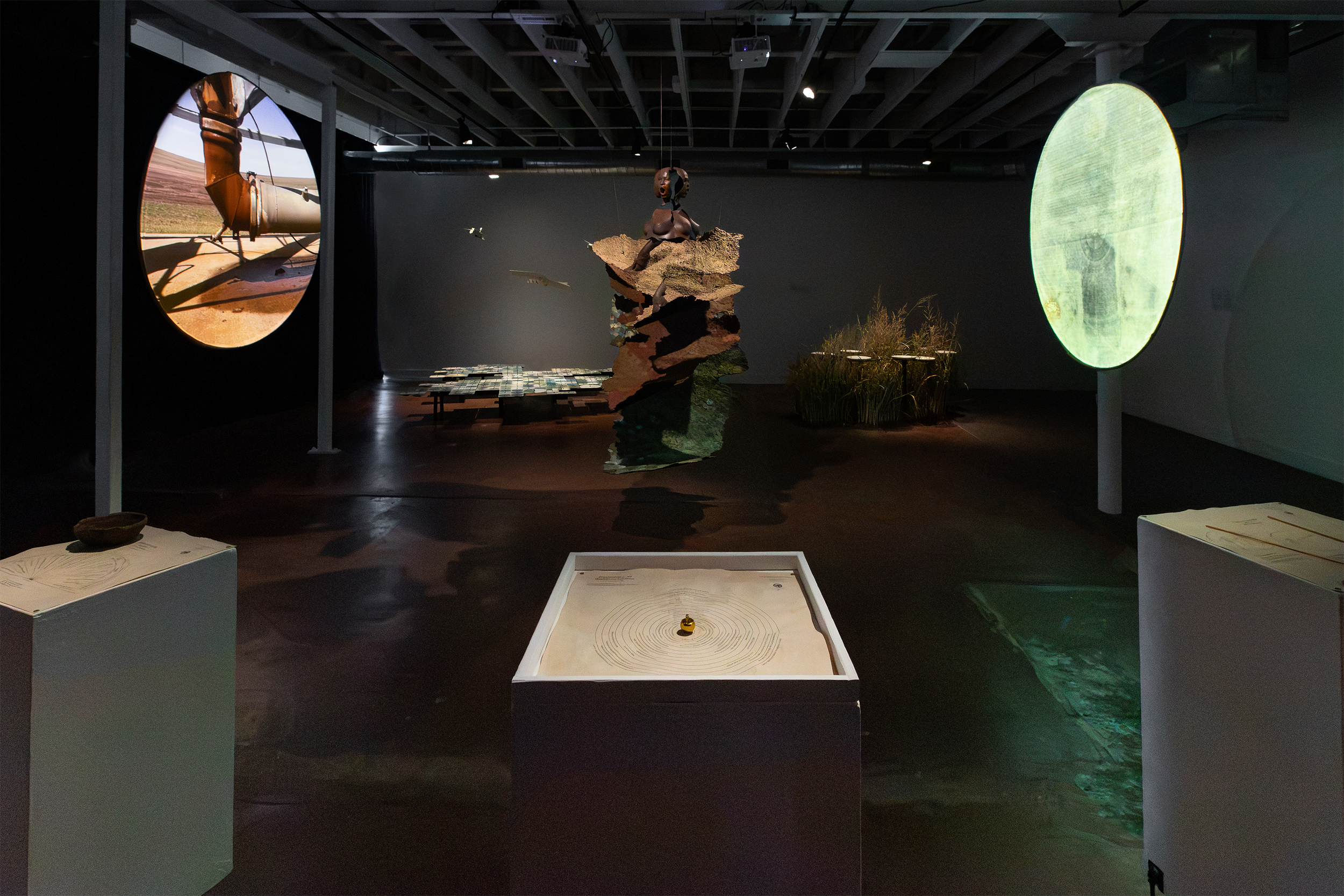
Machine ballet
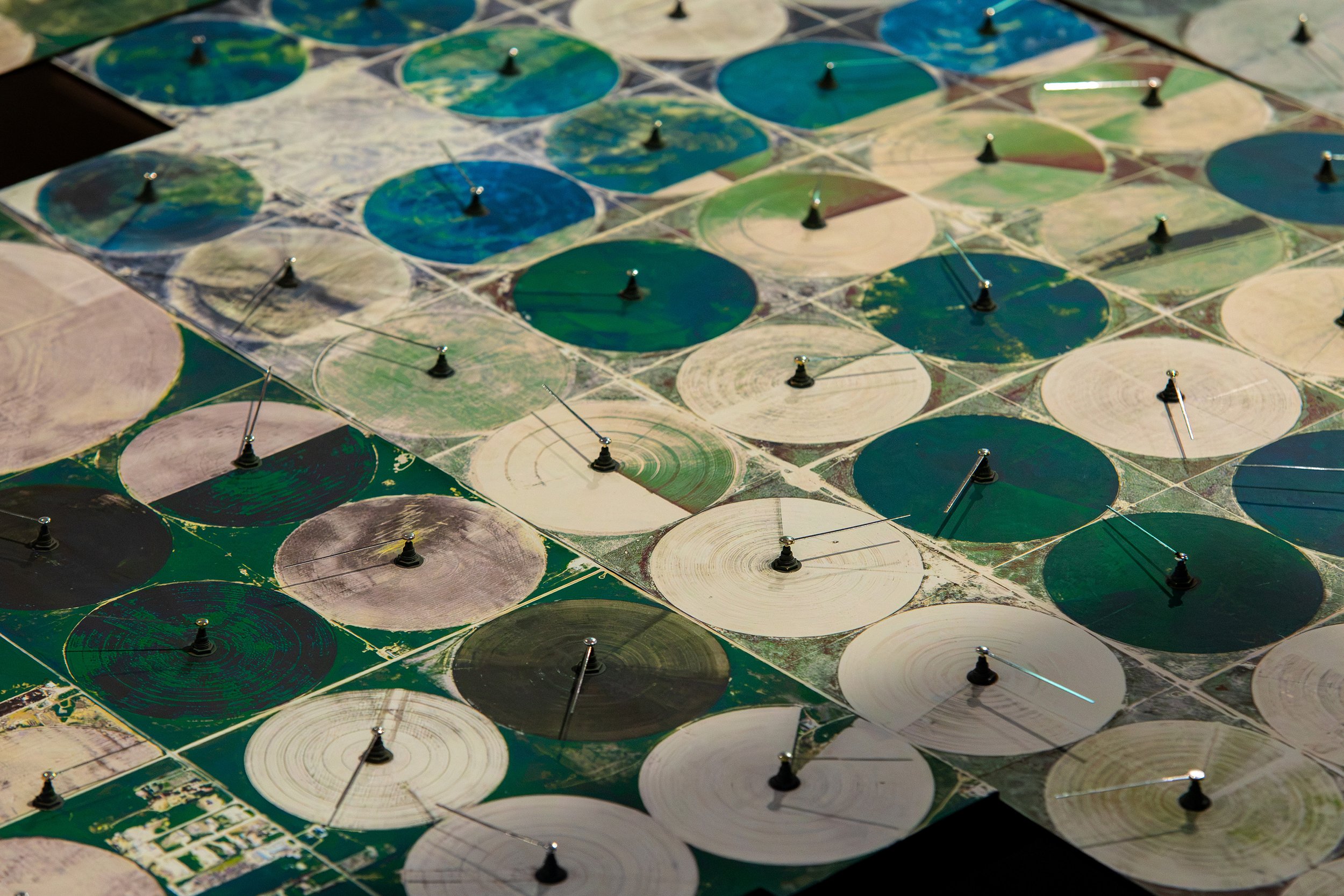
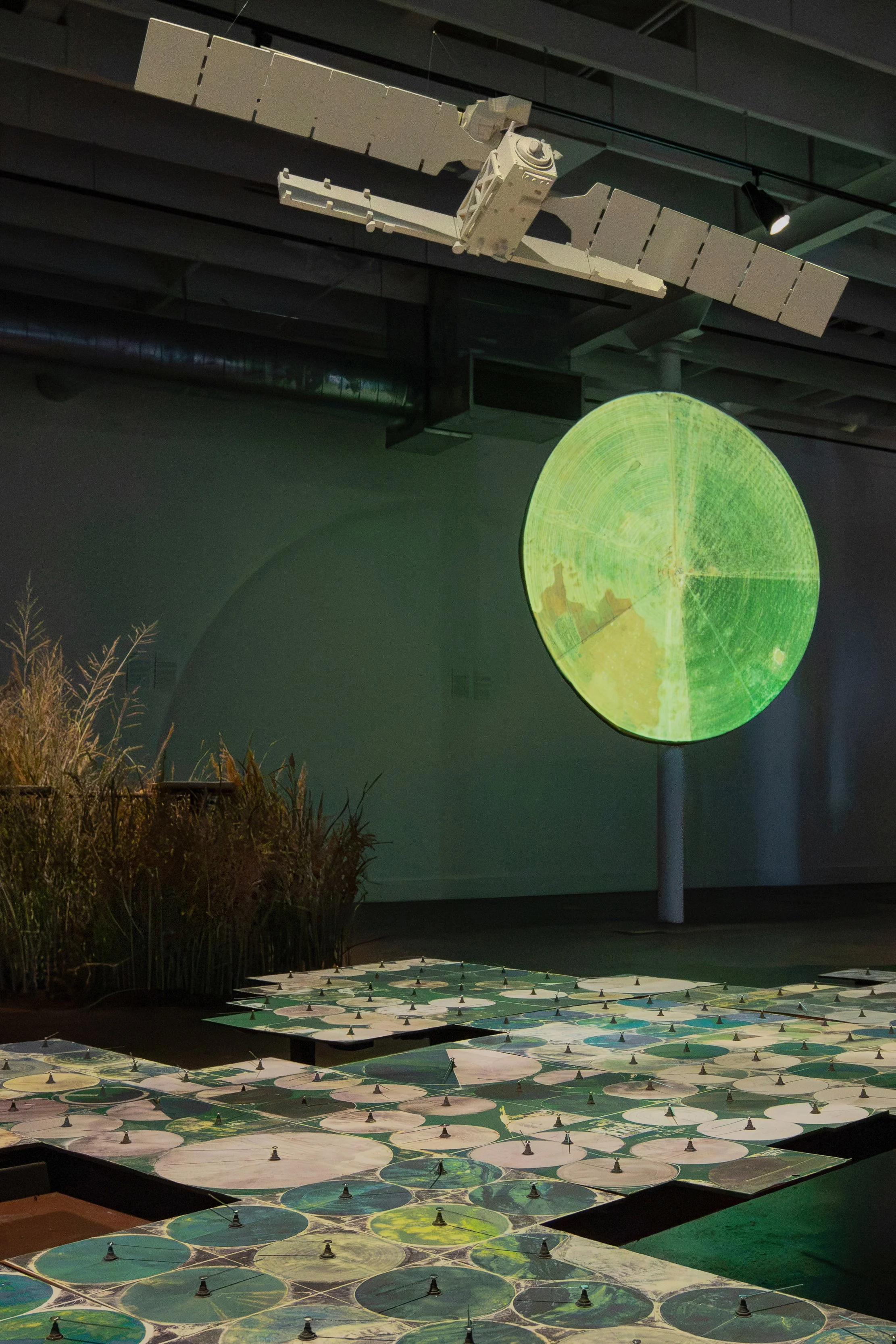
Machine Ballet brings together satellite imagery of irrigated agricultural fields, rotating clock hands, and suspended satellite forms. The images come from ESA Sentinel-1, Landsat 9, and NASA Terra, public satellite missions that collect information about crop health, soil moisture, and changes in land use.
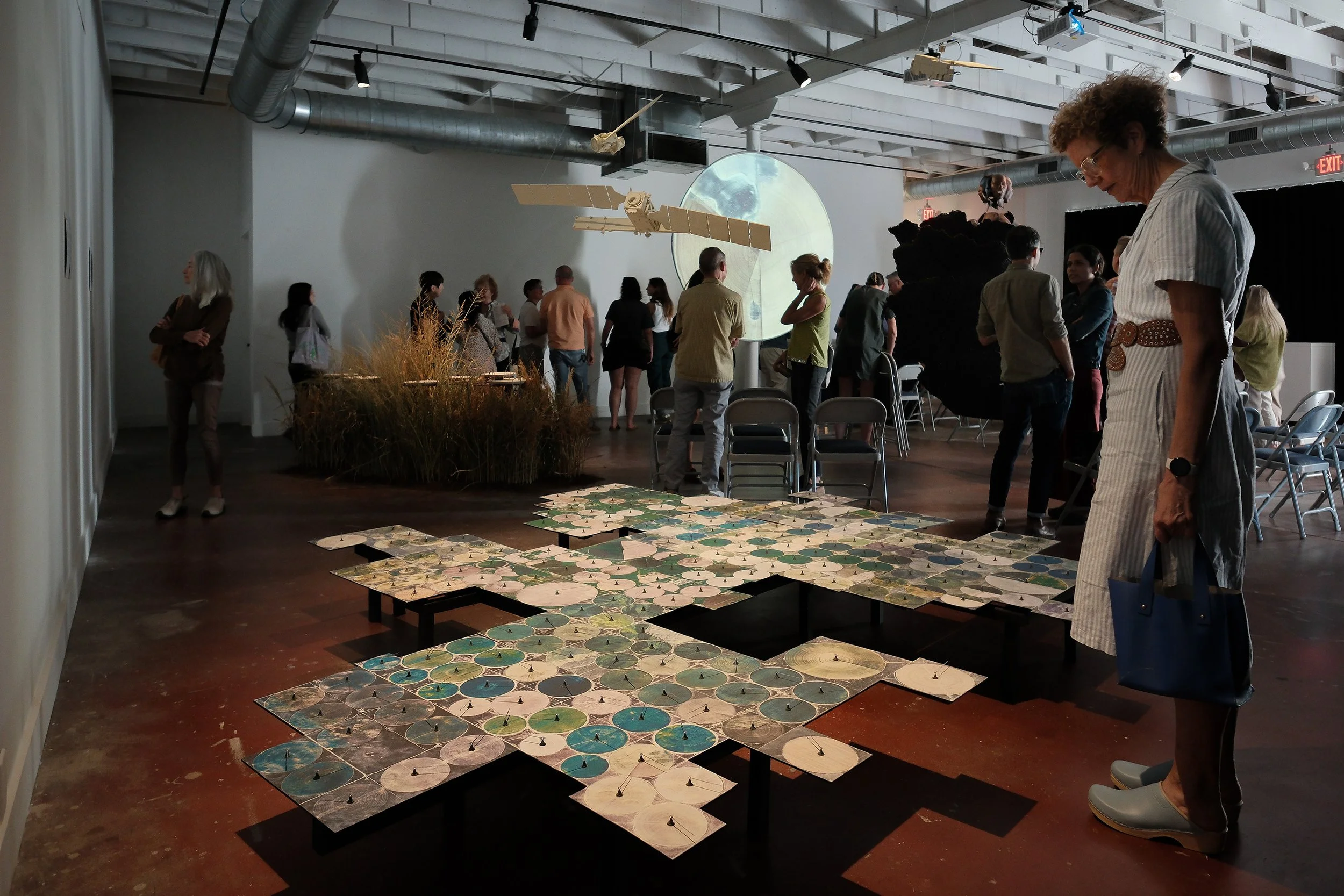
The satellite images are arranged in interlocking shapes to create an interesting outline. The circular patterns of the agricultural fields are a distinctive feature of the landscape, visible only from above, whether viewed from an airplane or through satellite imagery. At the center of each circular field, a clock mechanism slowly turns its hands, while suspended satellite forms rotate slightly with the movement of air in the gallery.
The work connects the circular movement of irrigation machines with the passage of time and the ways satellites observe changes in the landscape. Together, these movements point to the finite supply of groundwater beneath the fields and the growing pressure of using water faster than it can be replenished.
Materials: Satellite imagery, clock mechanisms, high-density fiberboard, PLA plant-based plastic
Dimensions: approximately 84”L x 84”W x 10”H
Year: 2026
Photos: Shanaz Maharaj, Bobby Scheidemann
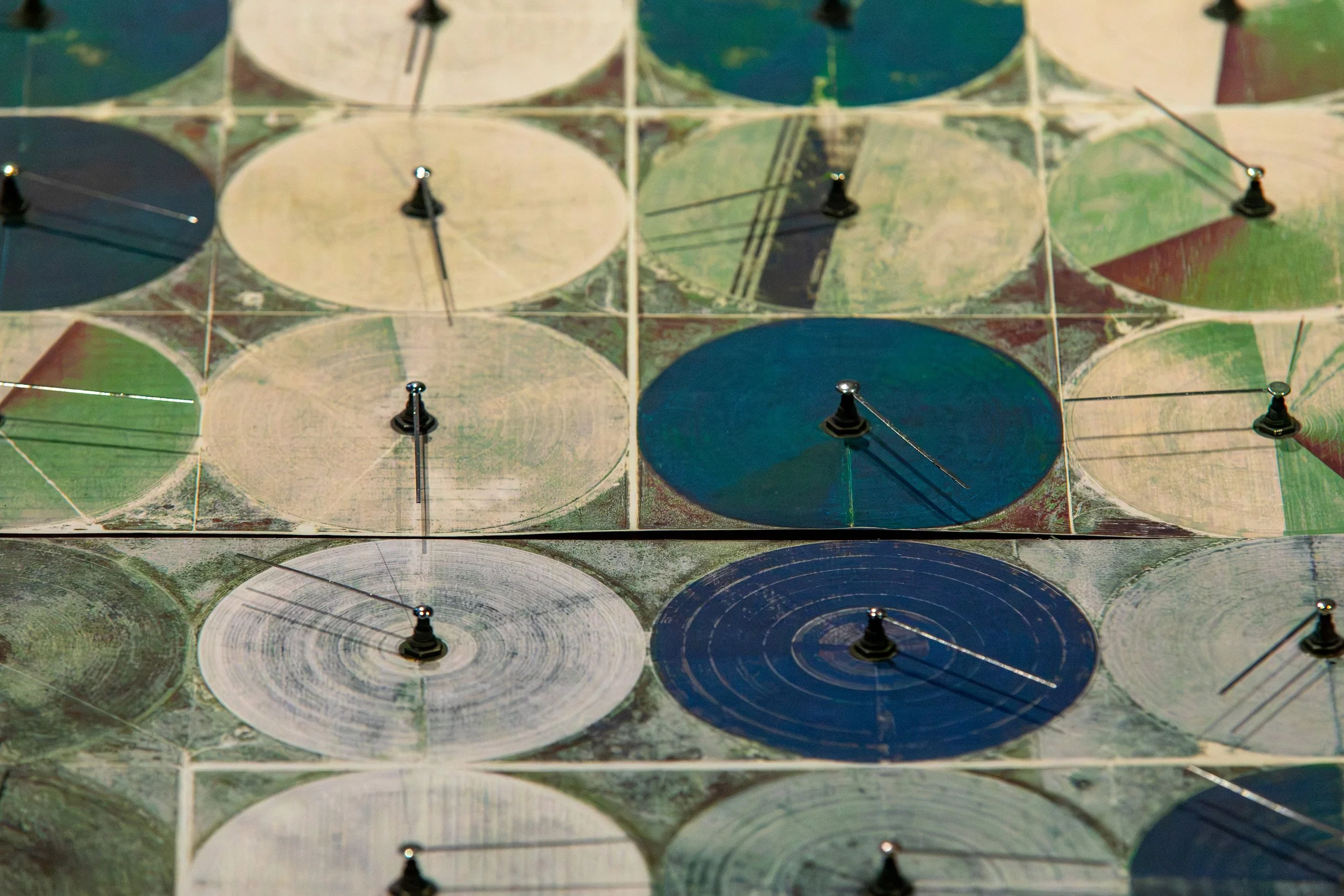
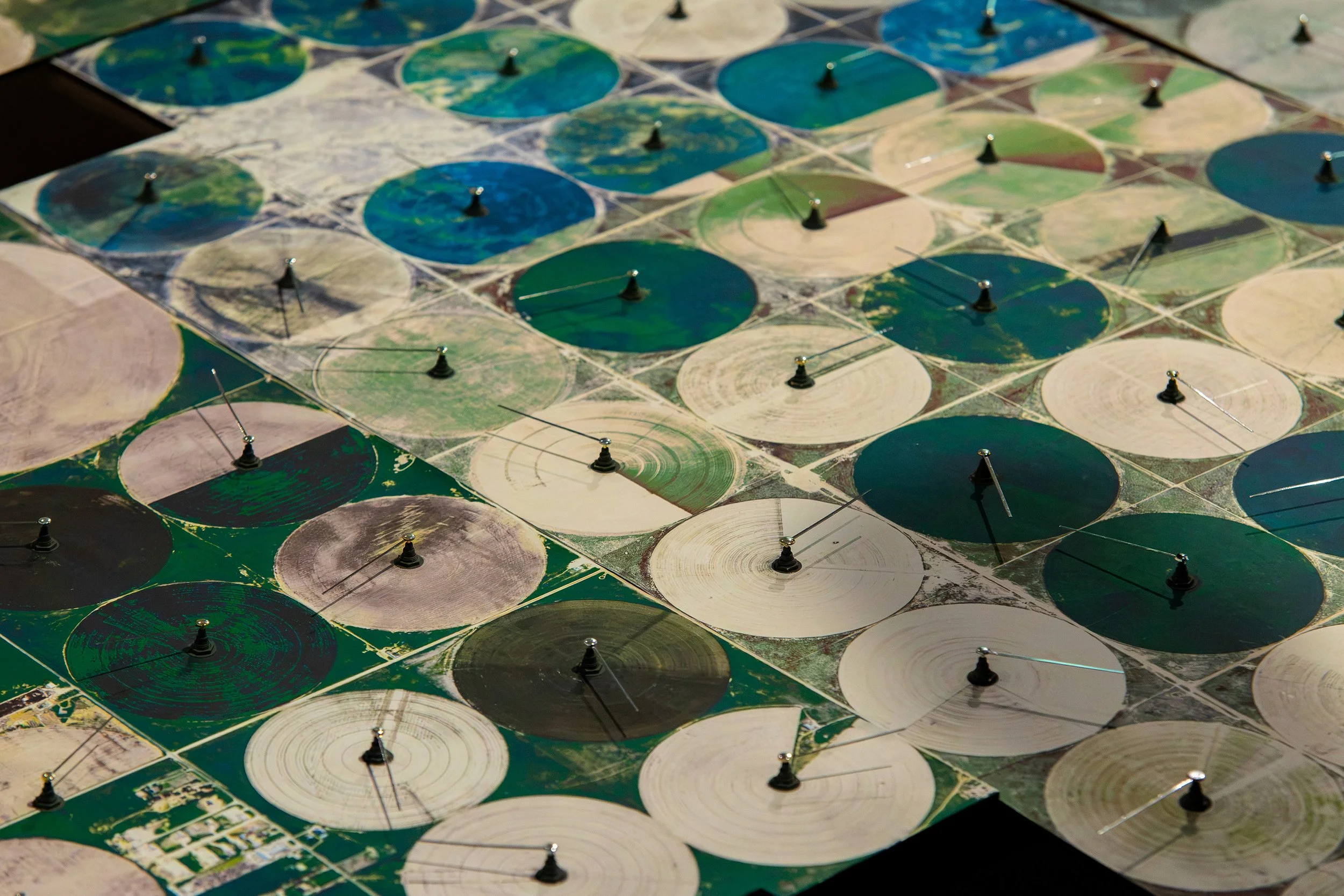
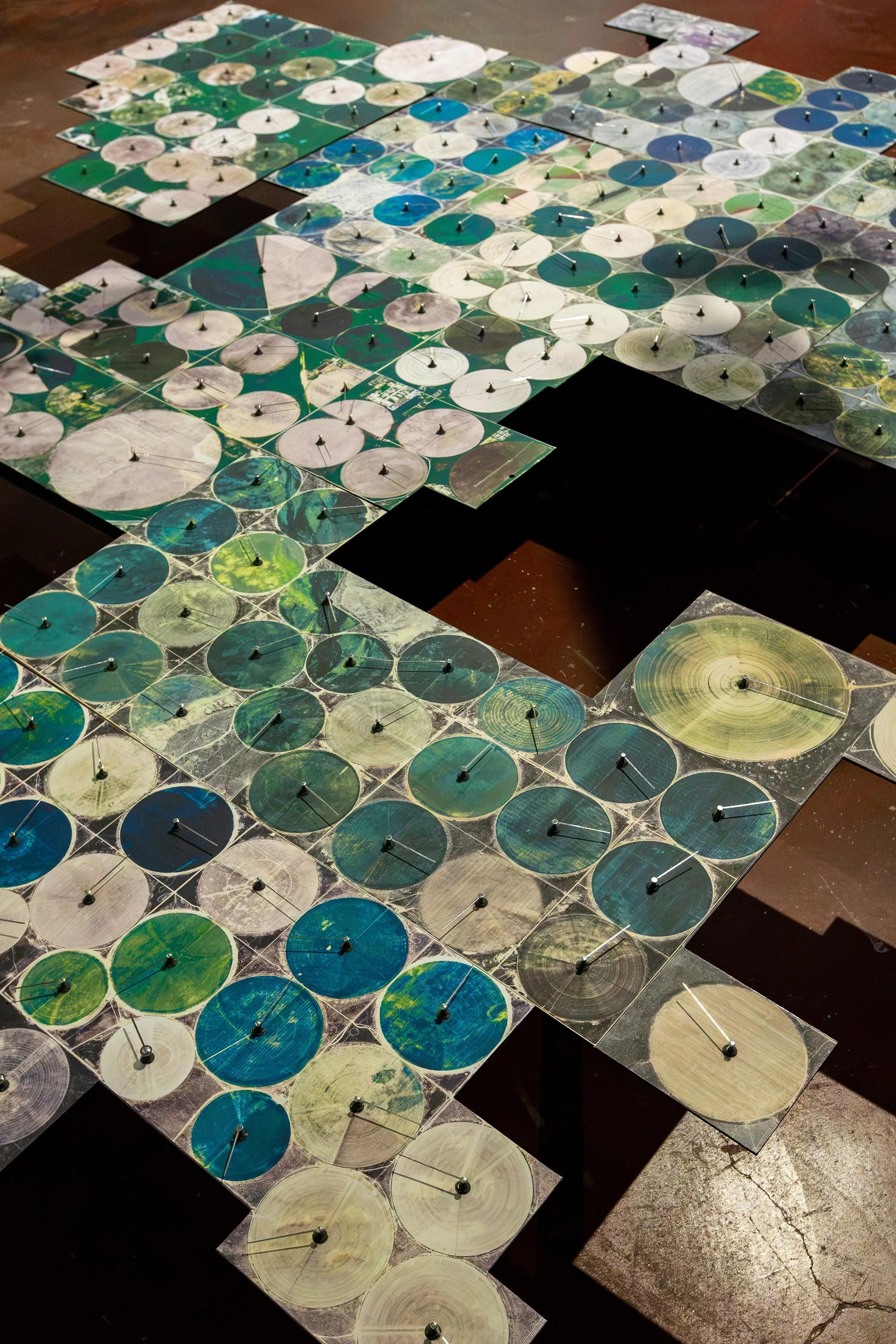
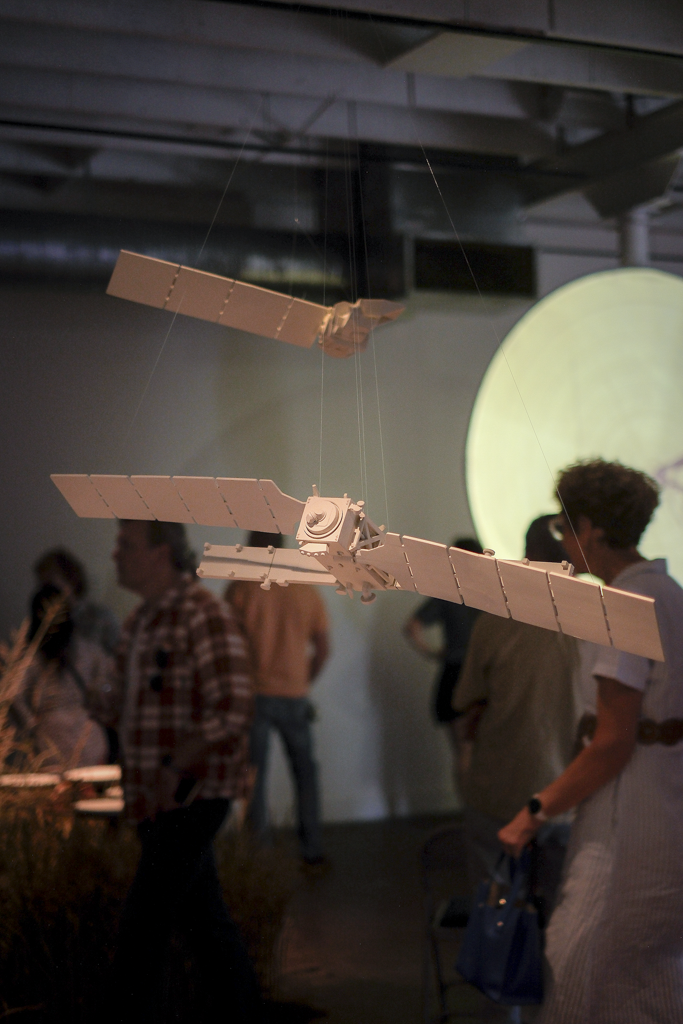
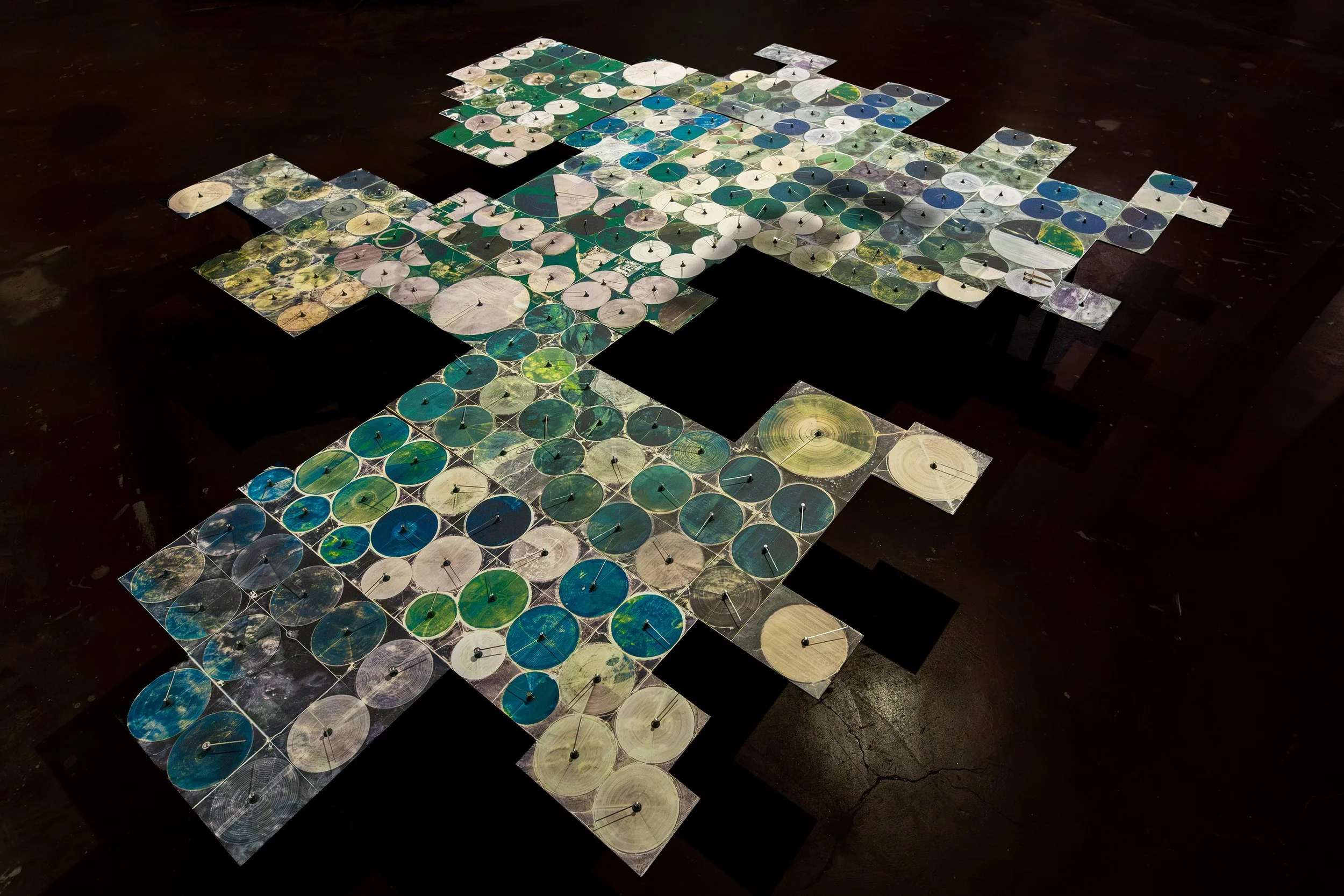
A landscape of engineered beauty, where the graceful movements of machines mask the slow depletion of an unseen water supply.
Within the exhibition Every Body a Water Body, Every Field a Clock, Machine Ballet offers an aerial portrait of the High Plains, a landscape that can only be fully seen through modern technologies.
Both natural and profoundly shaped by human activity, it is a place of striking contrasts: lush yet semi-arid, carefully managed yet increasingly vulnerable, unfamiliar from the ground yet vital to the food and water systems that sustain us.
The work's title points to the beauty and precision of this industrial landscape, while also suggesting the discipline and control behind it.
Like a ballet, its graceful movements are the result of an elaborate choreography. But beneath this carefully orchestrated beauty lies a more troubling reality: an agricultural system sustained by drawing down a finite supply of groundwater.