All That Moves Us: Tit for Tat
Tit for Tat makes the invisible visible, revealing how physical stress moves through a material in real time.
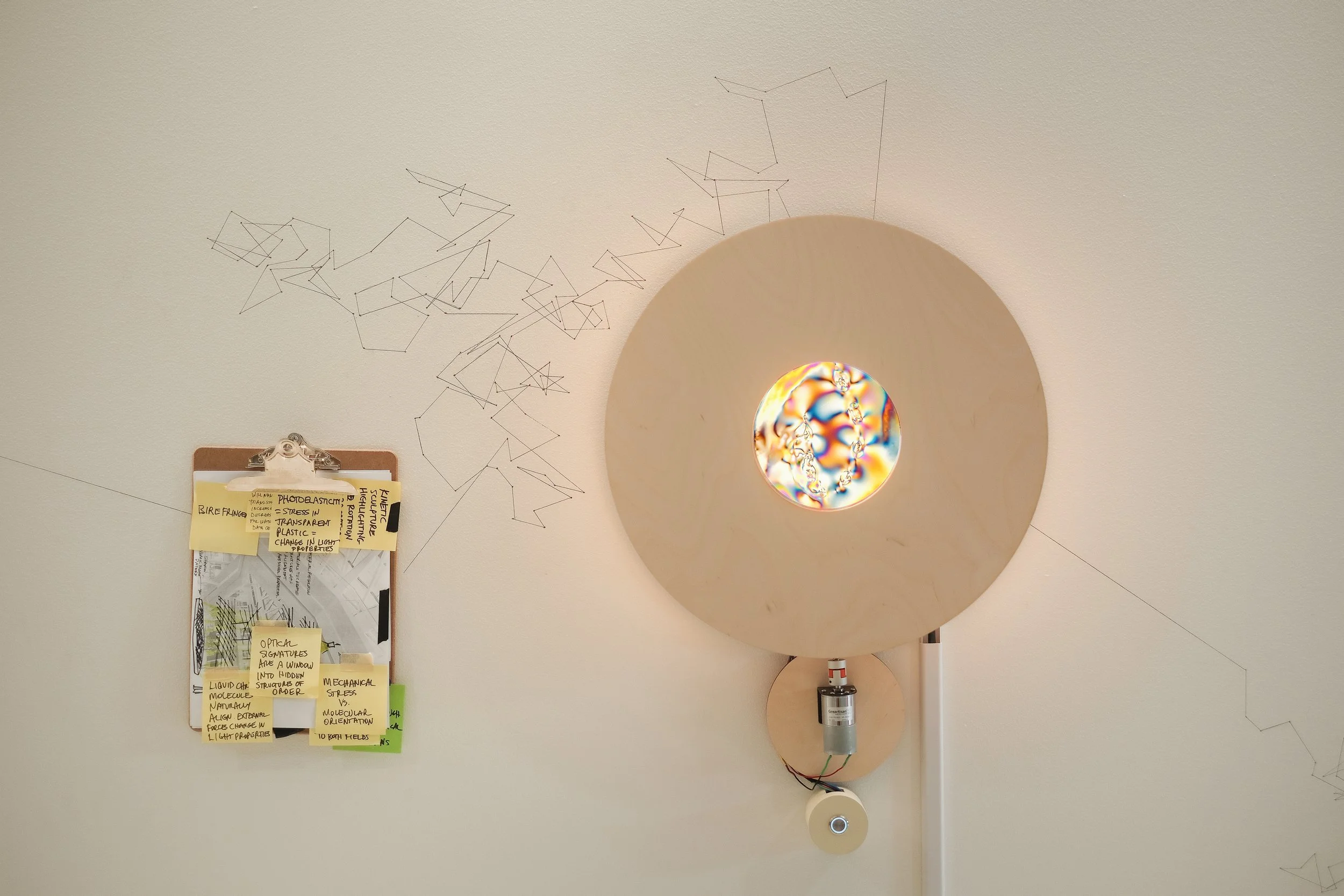
Vibrant colors glow and shift within a circular portal, drawing viewers in. On closer inspection, the surface reveals itself as a backlit sheet of clear plastic, heat-formed into a bumpy, irregular texture. What viewers may not realize is that the plastic is sandwiched between polarized filters and was shaped over a seed pod from the Texas Mountain Laurel, a hardy native plant adapted to Central Texas’s extreme climate swings.
The work leaves some of its inner workings exposed, inviting curious viewers to investigate how it produces this vibrant visual effect.
When a viewer presses a button, a visible motor rhythmically compresses and relaxes the plastic. The result is a shifting kaleidoscope of violet, orange, and blue that makes the forces moving through the plastic visible.
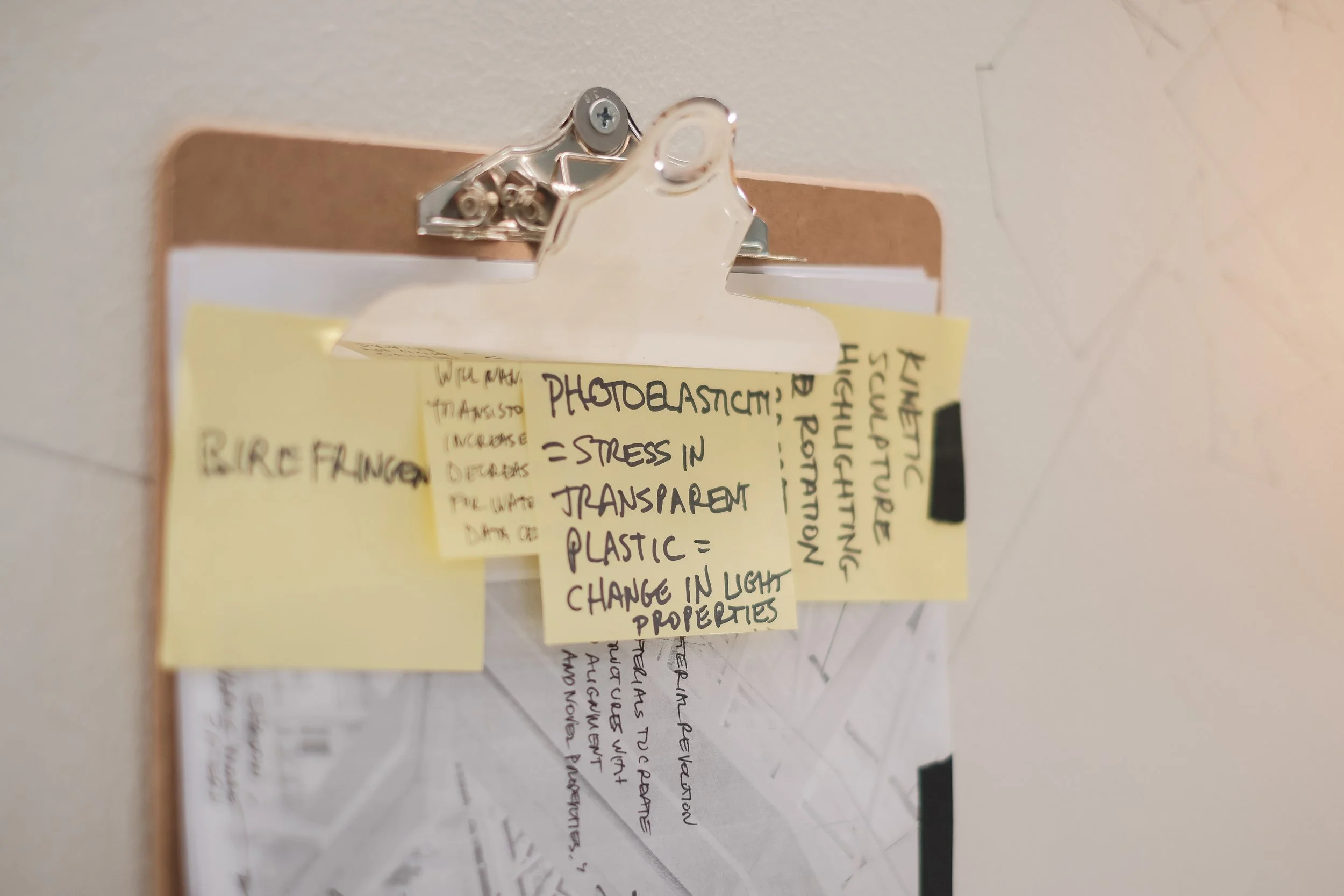
Developed during an art + science residency with the UT Center for Dynamics and Control of Materials (CDCM), the sculpture utilizes birefringence, an optical phenomenon where mechanical strain alters how light passes through transparent materials. Beyond its scientific grounding, the work acts as a metaphor for resilience and pressure, prompting us to consider the hidden stresses carried within our bodies, environments, and shared spaces.
Materials: laser-cut plywood, acrylic sheet, polarizing filters, LED light, 12V motor, push button, electronics
Dimensions: 12”W x 22’H
Fabrication Support: Ayushi Kate & J.E. Johnson at Texas Inventionworks, DCBLaser Cutting and Prototyping
Supported by: The Center for Dynamics and Control of Materials (CDCM), an NSF MRSEC at UT Austin
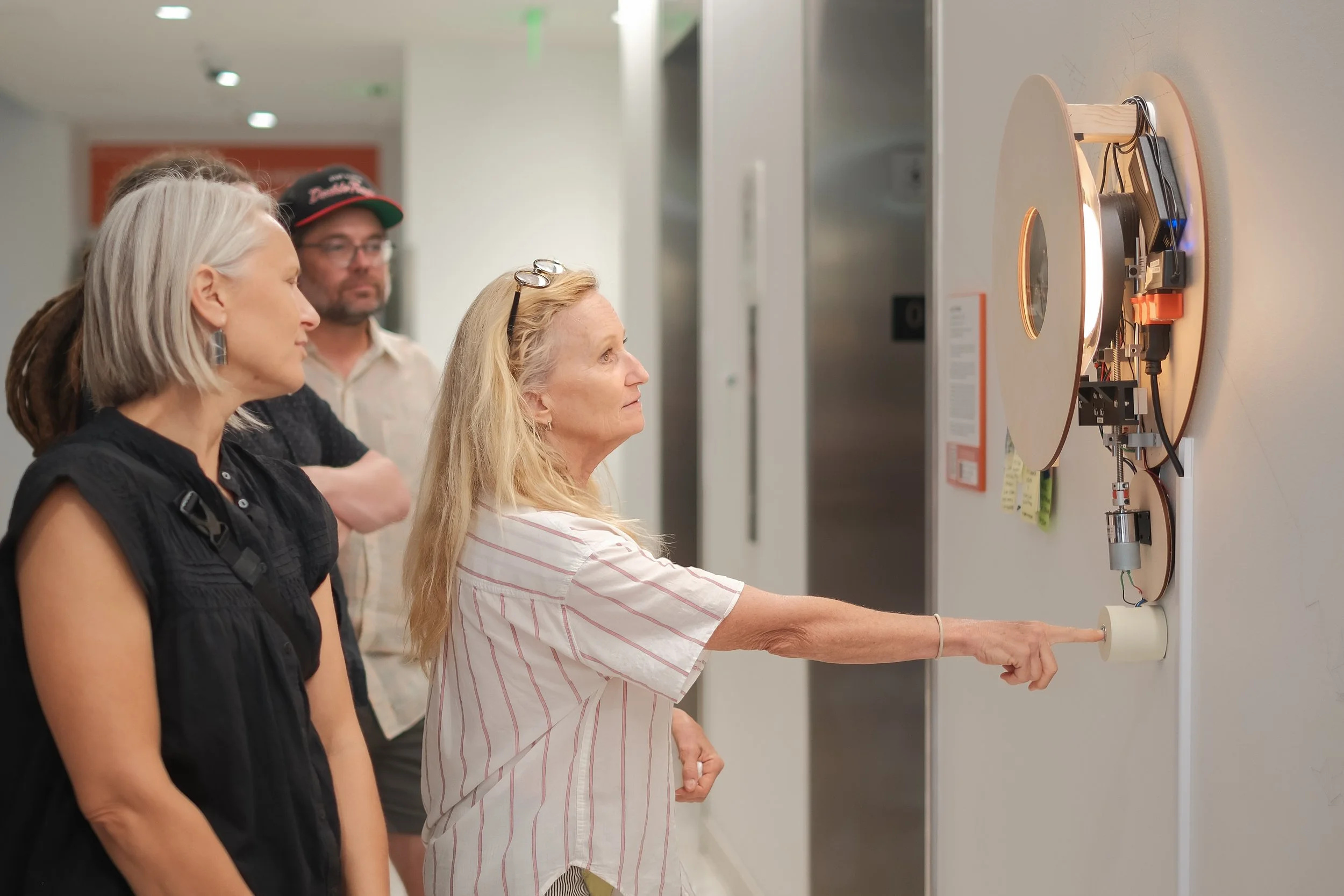

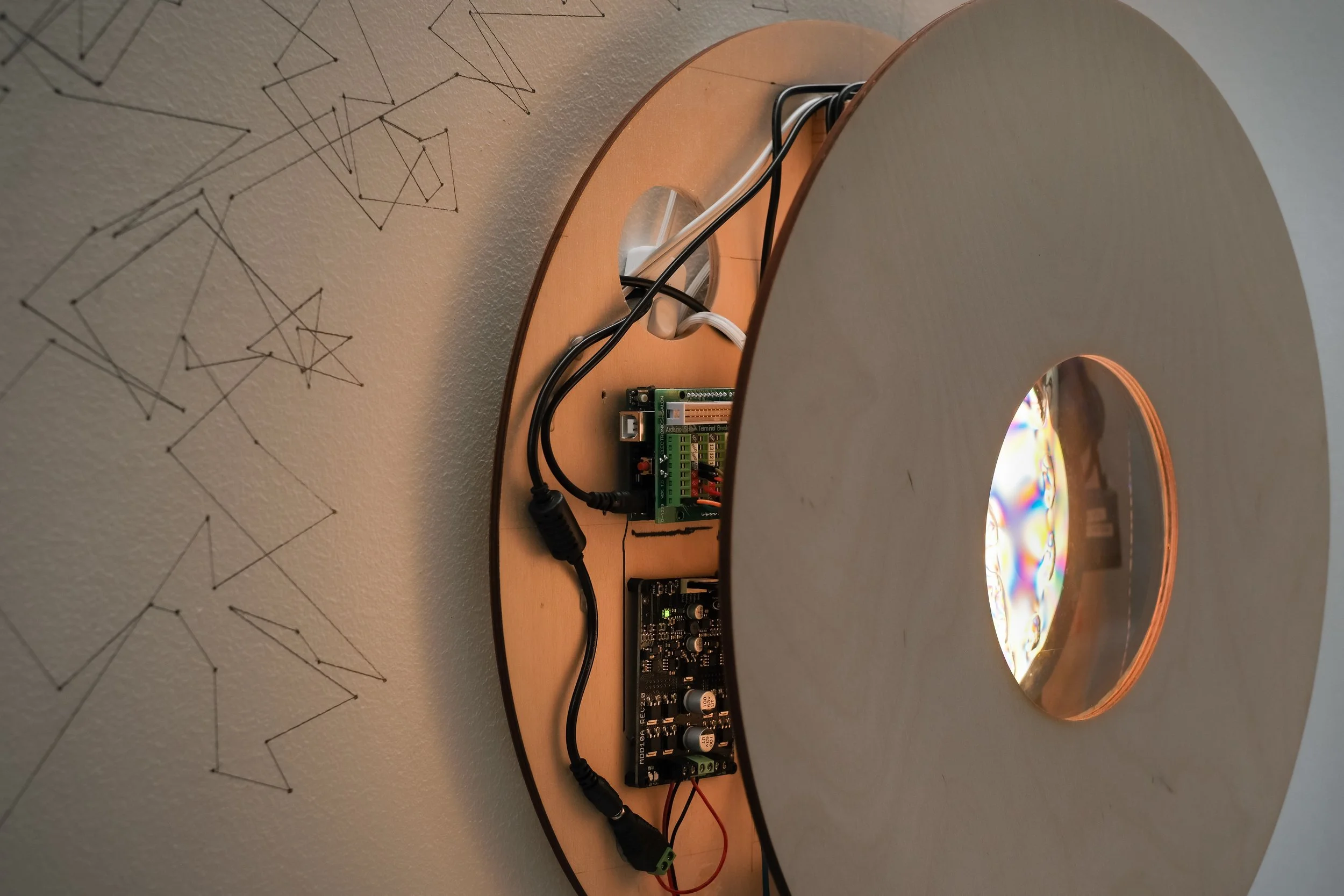
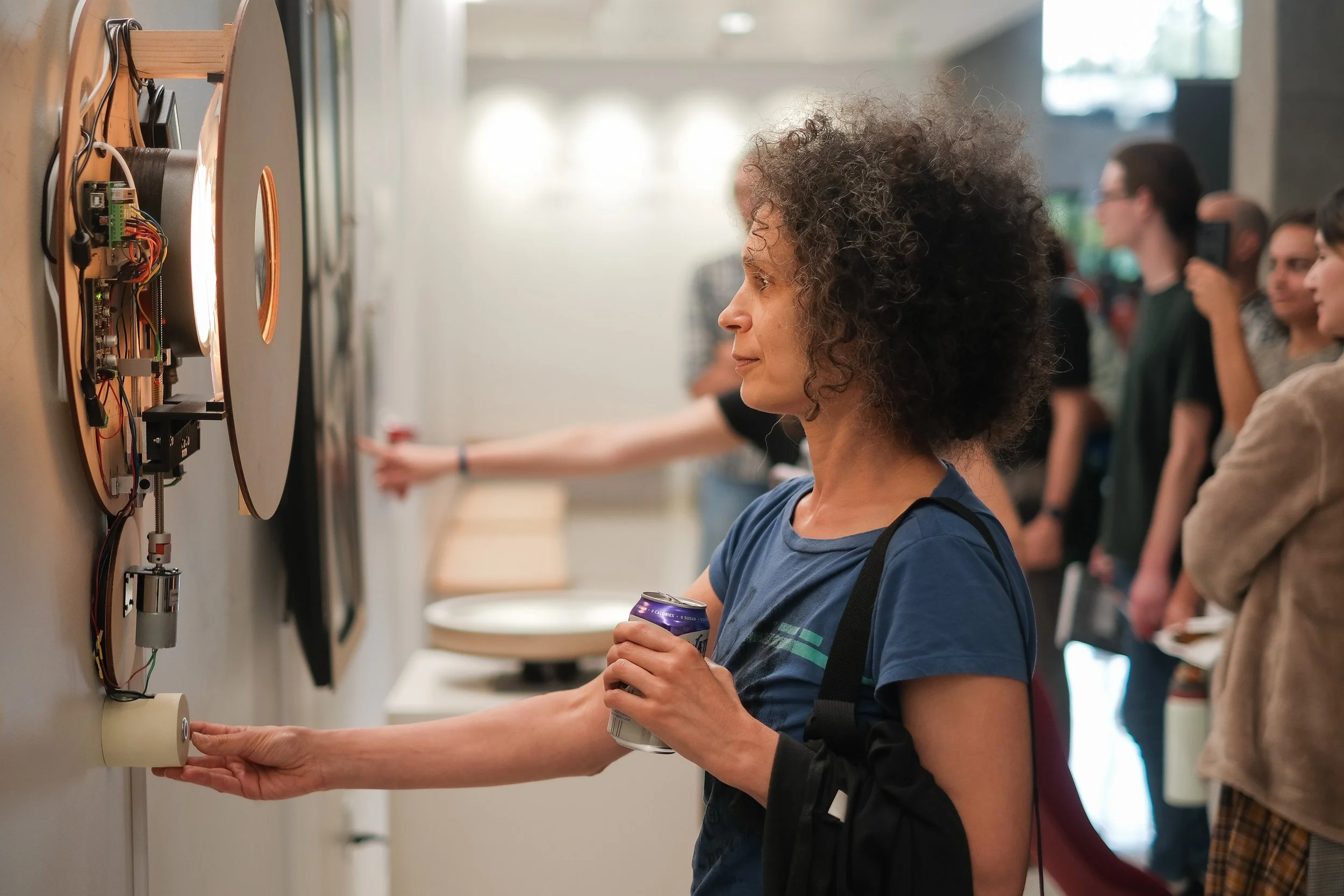
I built this piece using everyday materials like plywood, a 12V motor, 3D-printed parts, and an LED kitchen light to create something that is anything but utilitarian. The sides of the machine are left open, inviting artists, engineers, and everyone in between to peek at the "guts" of the work. By using common items instead of traditional materials like marble or bronze, I want to make the work feel more approachable and less intimidating, especially in the context of an engineering building.
I chose the title Tit for Tat because I am intentionally stressing out the plastic. Many of us have a stressful, complicated relationship with plastic: we worry about its recyclability, the presence of microplastics, or whether it’s safe to microwave. Materials have their uses and their beauty, but they also carry heavy consequences. By putting the plastic through this mechanical strain, I am engaging in my own "tit for tat," mirroring the tension the material creates in our lives back onto the material itself.
plastic [is a ] a Janus-faced companion who can rightly inspire our deepest admiration and our strongest disgust.
Susan Freinkel, Plastic: A Toxic Love Story