All That Moves Us: Towards the Spill
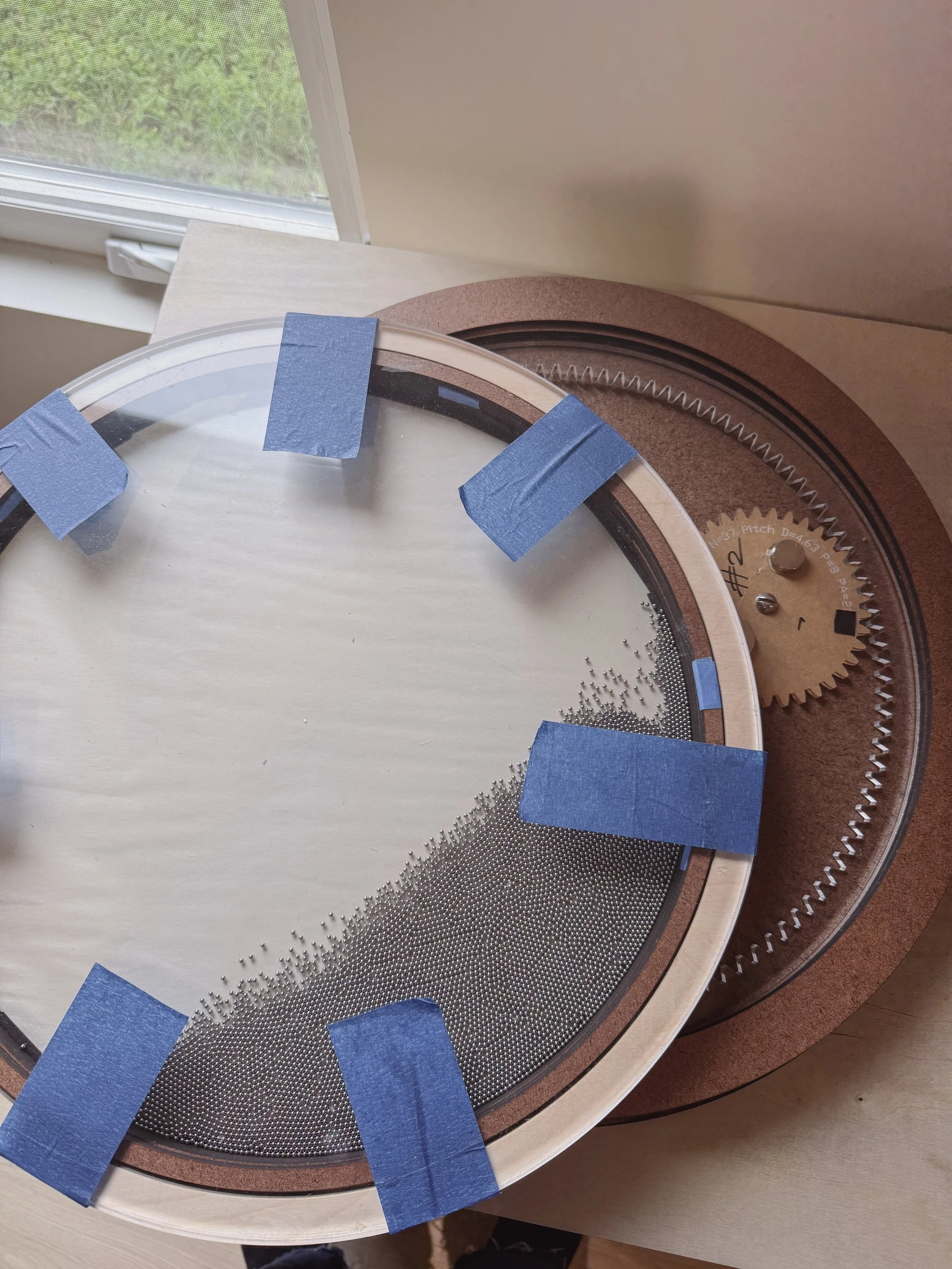
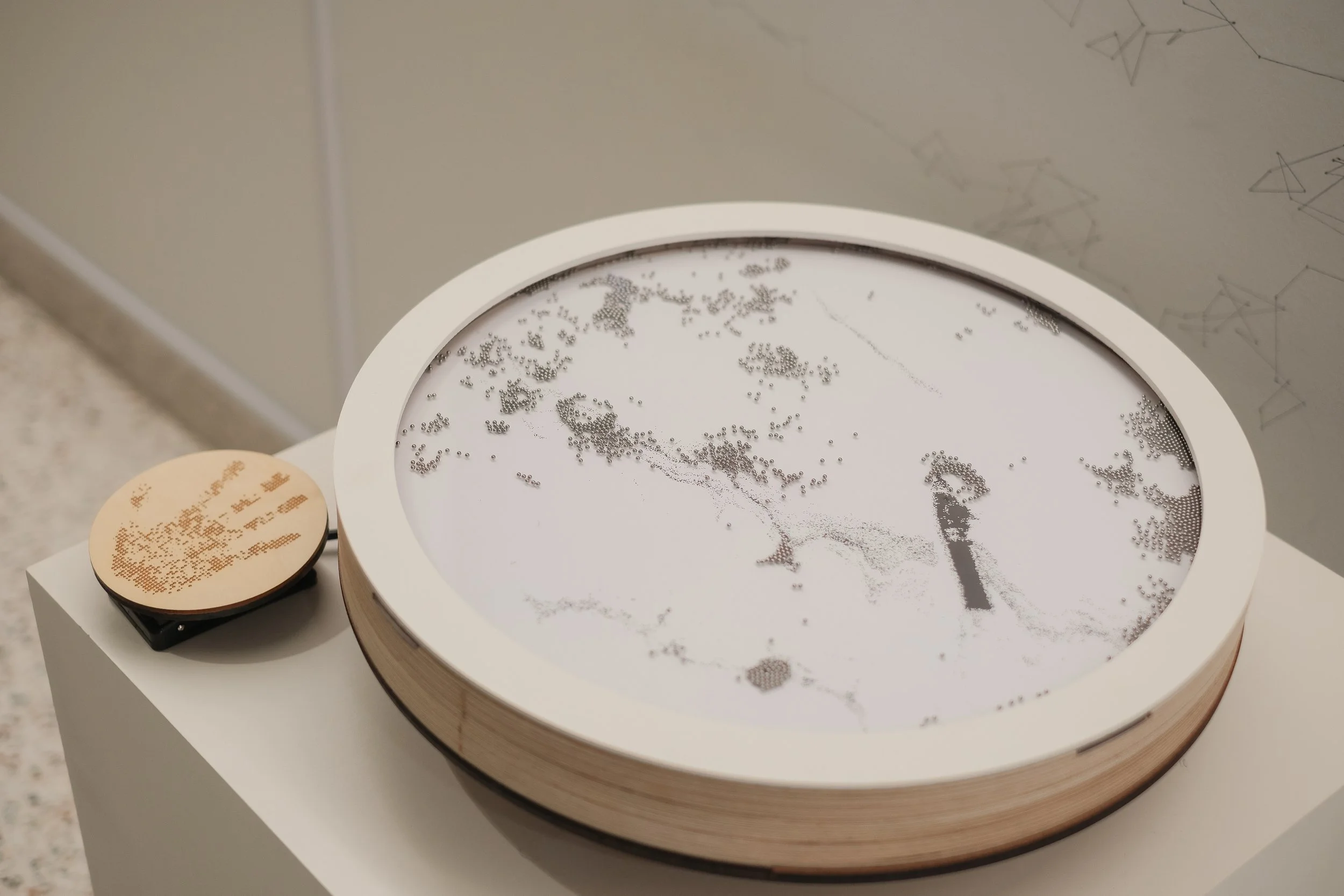
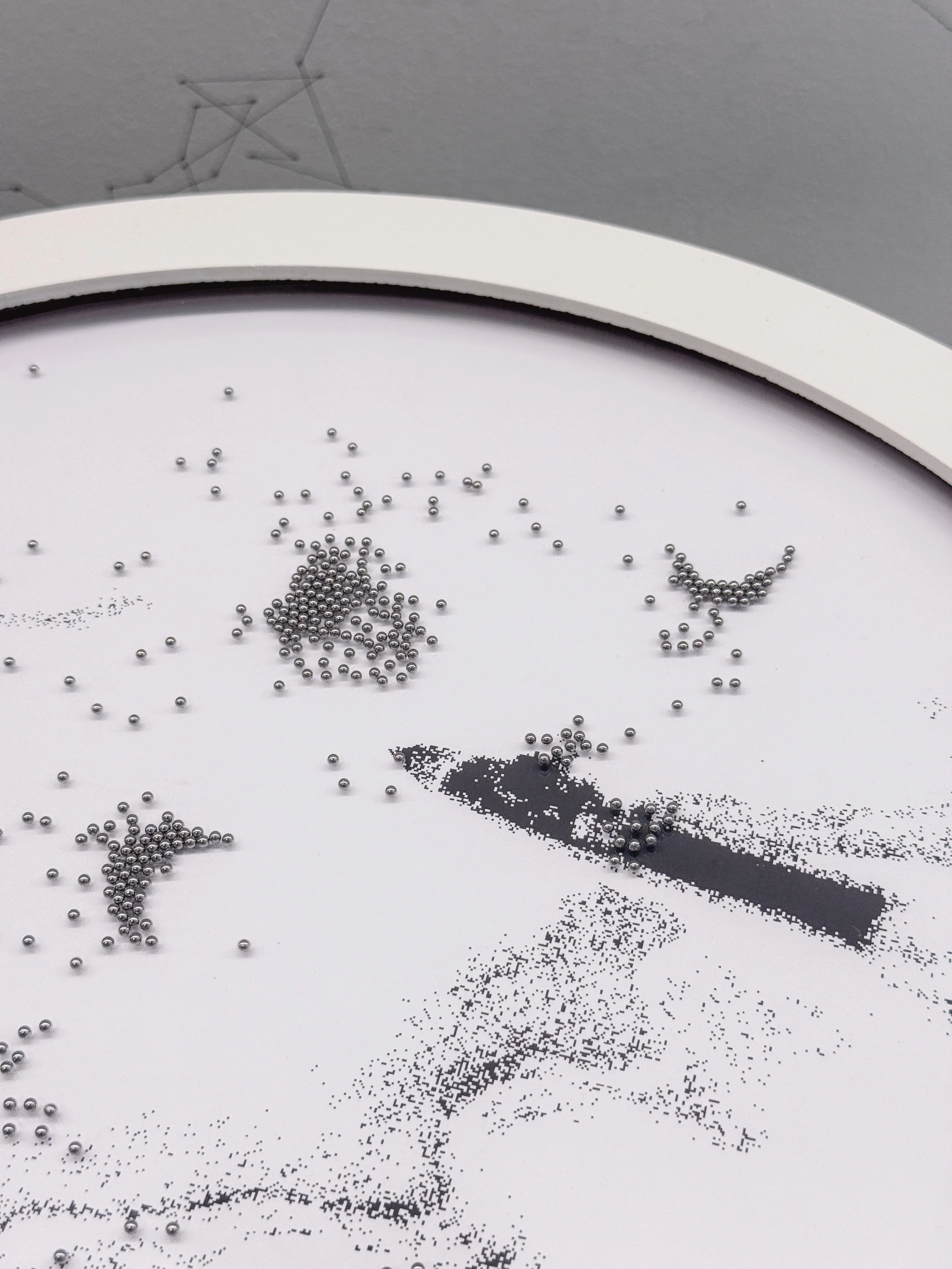
All That Moves Us: Towards the Spill an interactive kinetic installation that is both a meditative visual and sonic experience. Via hidden mechanics, hundreds of small metal beads in unexpected ways to generate a gentle susurration.
Developed during my 2025-26 art + science residency at UT’s Center for Dynamics and Control of Materials (CDCM) this work combines ideas from biophysics and ecological remediation.
Guided by Dr. José Alvarado’s research lab (ALAB) in the Center for Nonlinear Dynamics, the artwork translates active matter theory and the scientific lineages of M. Cristina Marchetti into a sensory experience. The piece imagines a speculative future for ocean bioremediation, where humans can direct self-propelled swarms of germs to digest and break down marine oil spills.
The tens of thousands of different compounds that make up oil can only be biodegraded by communities of microorganisms acting in concert.
National Center for Biotechnology Information
Materials: metal balls, acrylic, plywood, high-density fiberboard, PLA, motors, mechanical components, black & white print
Dimensions: 45”H x 22”W x 22”D
Scientific Guidance: Dr. Jose Alvarado’s Lab (ALAB), Center for Nonlinear Dynamics, UT Austin
Engineering Support: Tejasva Kalra
Fabrication Support: Ayushi Kate & J.E. Johnson at Texas Inventionworks, DCBLaser Cutting and Prototyping
Supported by: The Center for Dynamics and Control of Materials (CDCM), an NSF MRSEC at UT Austin
The Process
All That Moves Us: Toward the Spill began with a deep dive into the work of physicist M. Cristina Marchetti, specifically her research on active matter.
Research to Concept
Before this project, I knew nothing about active matter or the complex yet predictable patterns these systems generate at large scales. During my research, I discovered the active matter animations of Danielle McDermott (YouTube: @daniellemcdermott9101) and found their motion hypnotic. Using computer simulations, she models two-dimensional systems that self-organize into beautiful, functional patterns.
That was the spark: the idea of creating a machine capable of recreating those patterns as a physical artwork.
Concept to Prototype
My goal was to translate active matter behaviors into a kinetic sculpture, transforming a two-dimensional simulation into a tangible, embodied experience. I wasn't interested in building a literal scientific model. Instead, I wanted to create a kind of mechanical meditation—an artwork that could evoke the beauty, rhythm, and choreography of active matter interactions.
Emergence
My earliest prototypes relied on vibrating motors, which made the beads dance energetically but produced an unbearable amount of noise. Then, while moving trays of beads around my studio, I noticed something unexpected: the gentle swaying motion created a soothing, almost meditative sound.
That discovery changed the direction of the project. I immediately began designing a machine that could recreate both the motion and the sound. Only later, after becoming captivated by this new approach, did I recall the connection between active matter research and the collective behavior of marine bacteria.
Failure: Wasteful Yet Necessary
Bringing the work to life was a true labor of love and a mountain of troubleshooting. I made many digital and physical prototypes. The greatest challenge was achieving movement that felt fluid and alive rather than rigidly mechanical.
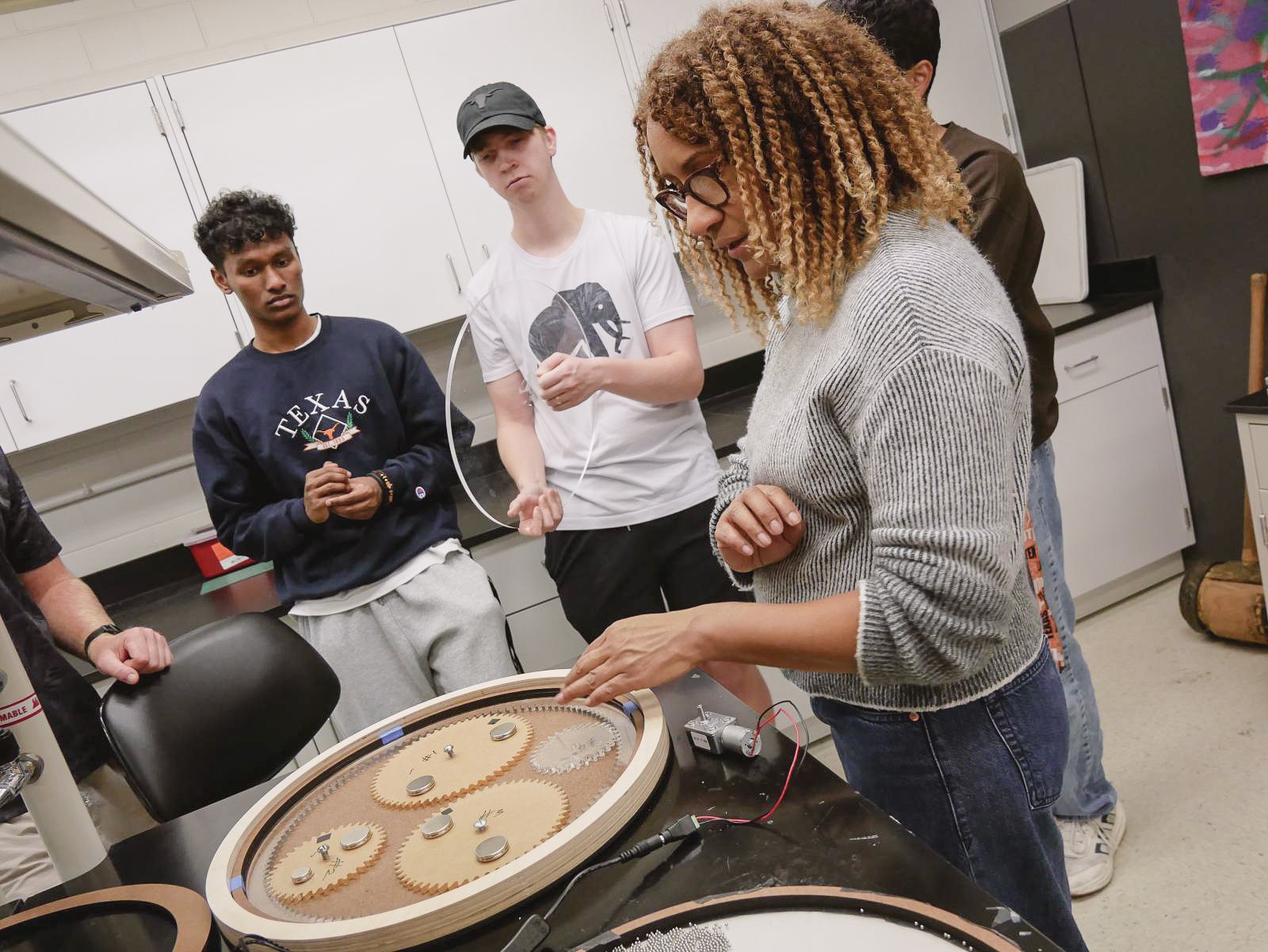
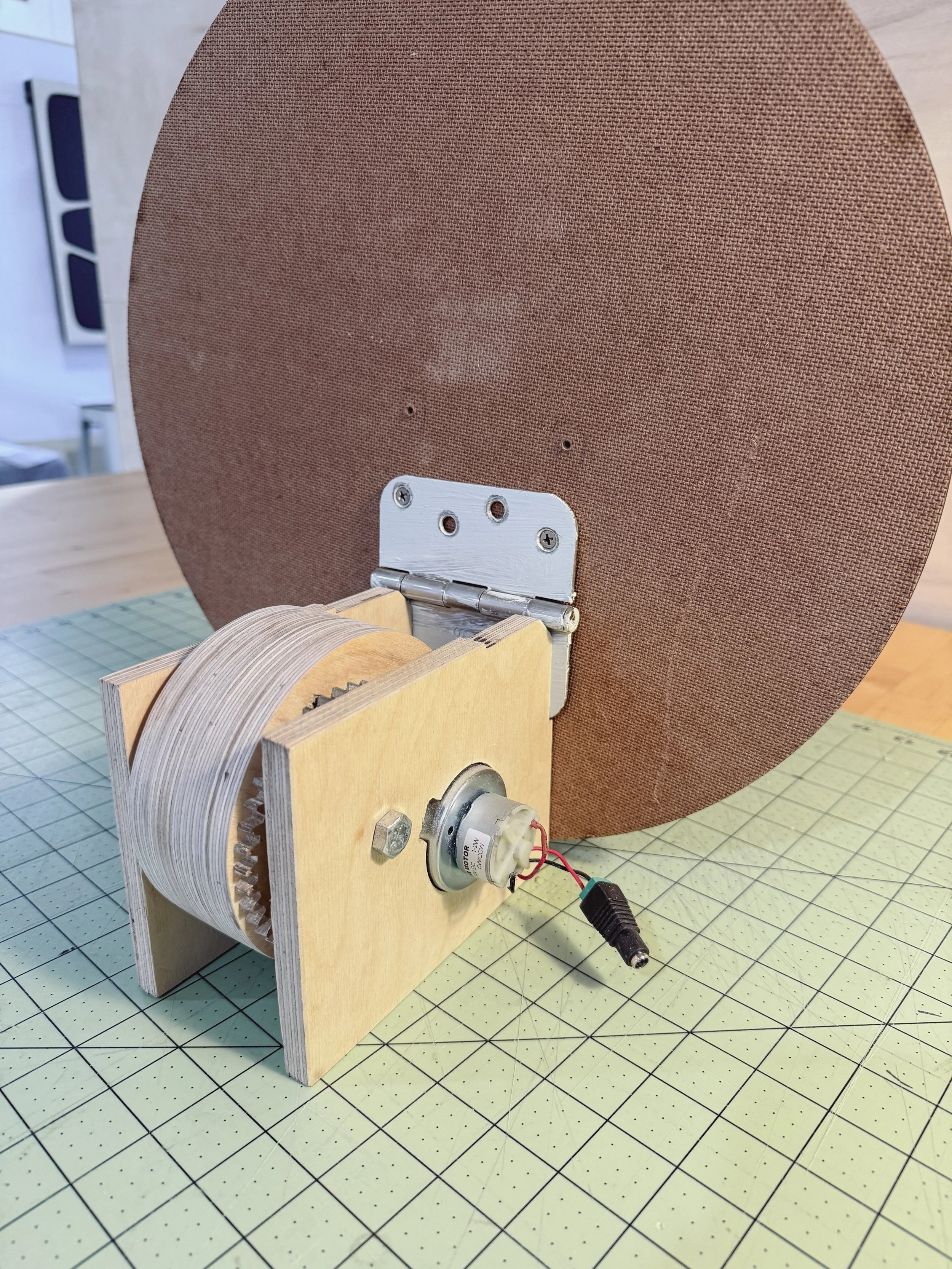
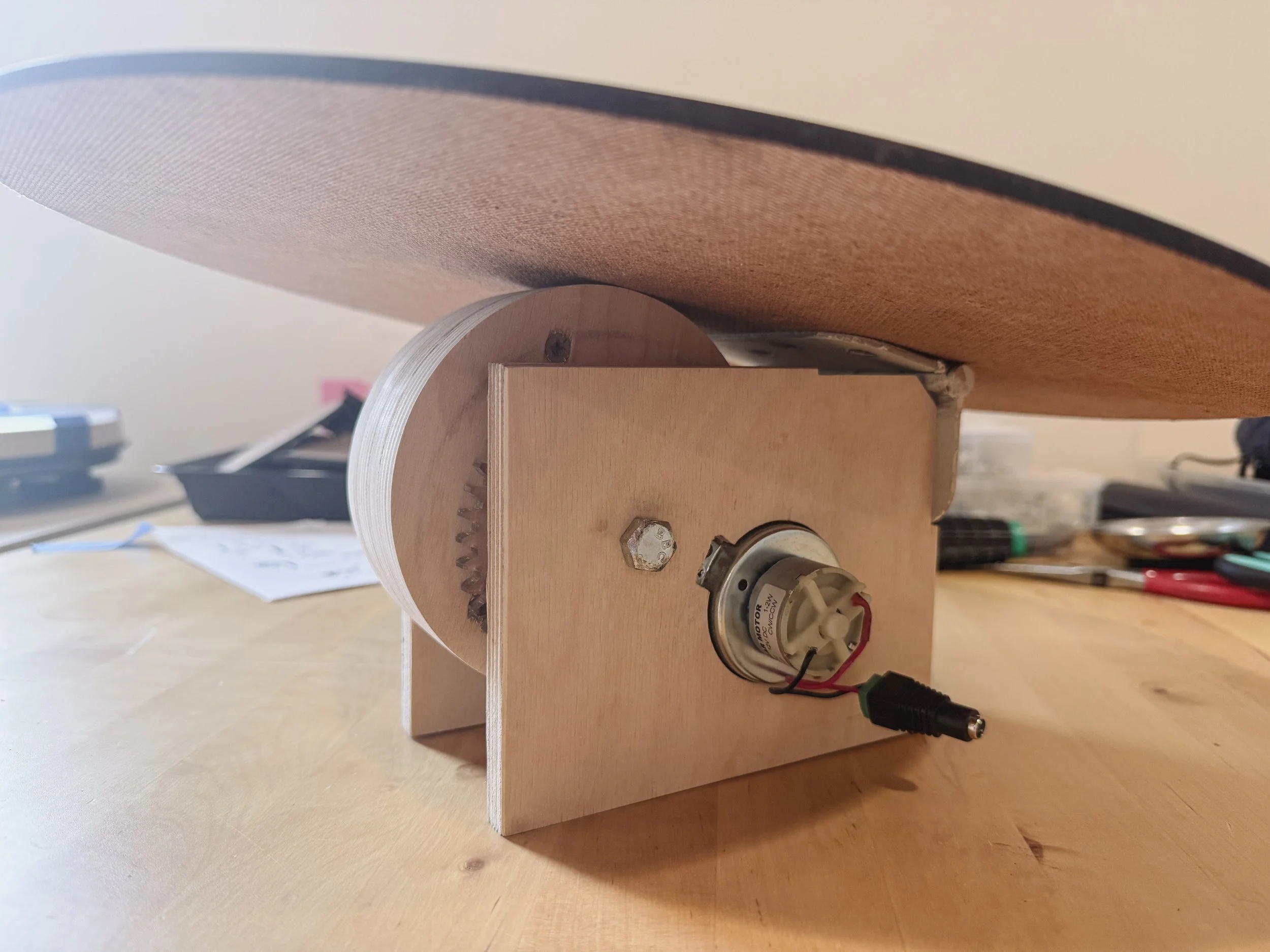
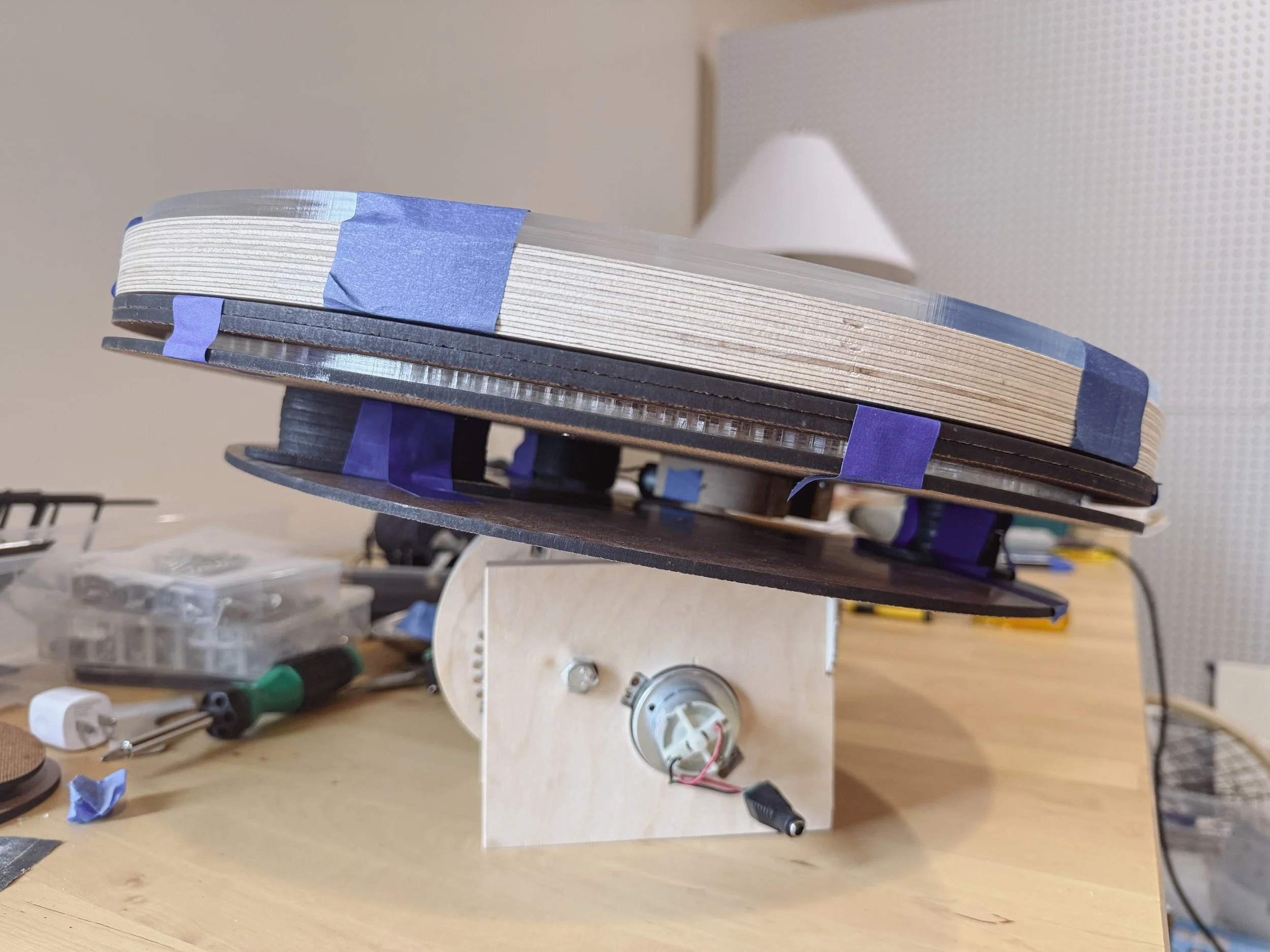
I explored numerous approaches to building a rocking mechanism. Even after settling on a design direction, I wrestled with motors that groaned under strain, gears that refused to mesh, and acrylic components that snapped under pressure. The process was often frustrating, but each failure revealed the next step forward.
My digital prototyping included animating virtual gears and magnetic systems to test whether they could produce a more organic quality of motion. Eventually, I collaborated with a mechatronics engineer to translate my DIY prototype into a CAD model, which proved to be a turning point.
Together, we identified friction points and replaced improvised components with precision-engineered parts. The groaning, squeaking, and stuttering disappeared, replaced by smooth, effortless movement.
I am still coming to terms with how wasteful this process can feel. At the same time, I am learning how to carry these lessons forward, making each project more informed by the successes and failures of the last.